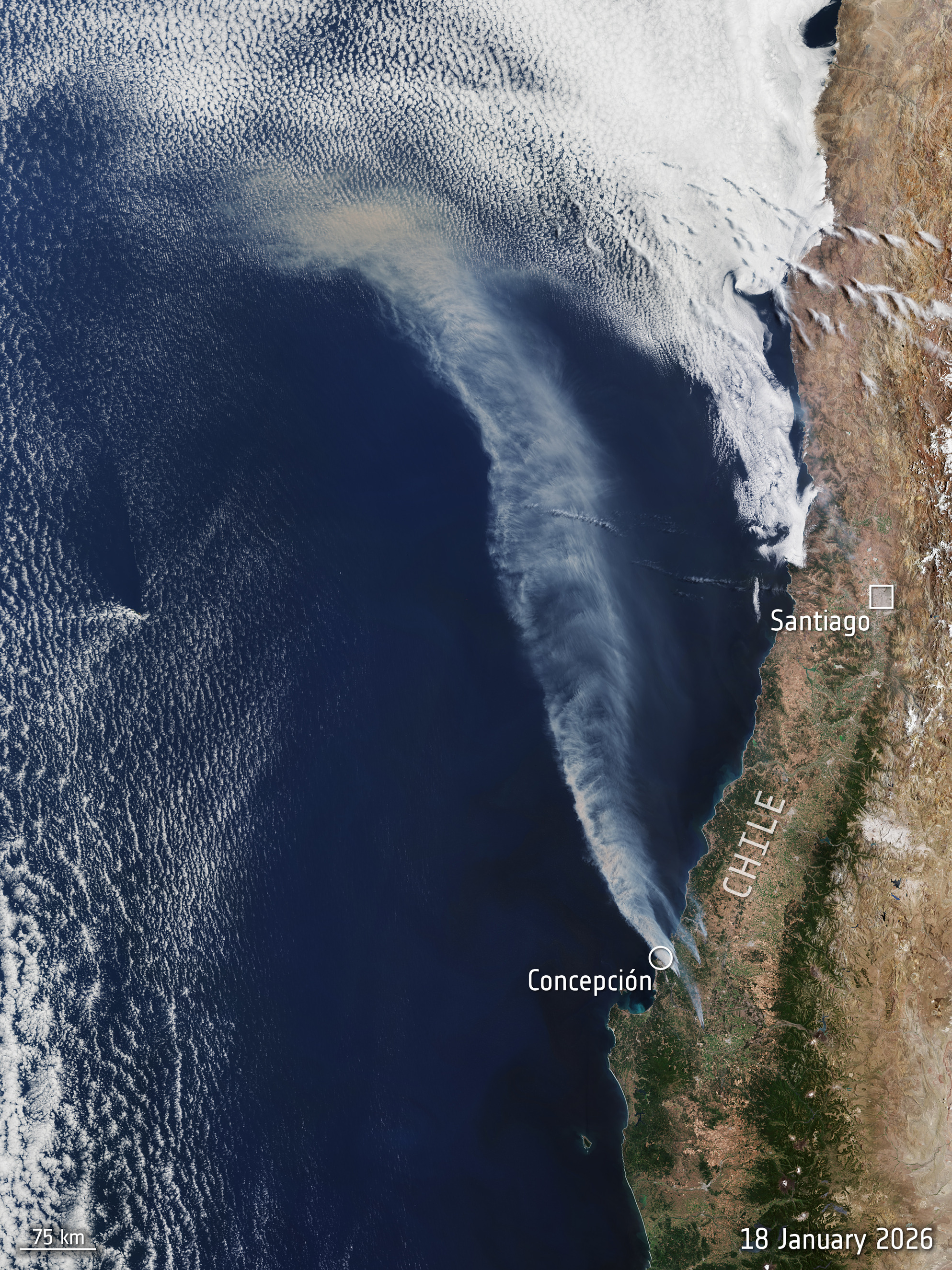
In much of California, wildfire insurance has become hard to buy. Private insurers have been dropping homeowners in the most fire-prone areas, and those customers, with nowhere else to go, have swelled the state’s plan of last resort, the insurer that covers people no company will touch. Underneath the retreat is a pricing problem. Insurers priced wildfire by studying decades of past losses and assuming the next decade would resemble them, and climate change broke that assumption: the fires now come more often and burn more severely than the record holds, in places it never flagged. California then barred the obvious fix, pricing with forward-looking models or passing reinsurance costs into premiums, so when the past stopped predicting the losses, insurers had no lawful way to re-price.
In 2025 the state’s insurance regulator offered a way out. Insurers could price wildfire with forward-looking models of future fire, instead of past losses alone, as long as they wrote more policies in the riskiest places. Some of those models read the ground from space, measuring the brush around a house that would carry a fire to it. For the first time, a satellite could help set what a Californian pays for cover. This is the moment Earth Observation companies, the businesses that turn satellite imagery into answers, have waited a decade for: a customer who cannot do the job the old way and must reach for something new.
Here the insurer hits something it cannot buy, and it is not technical. A satellite does not measure whether a house will burn. It measures the energy that reaches the sensor. To make that say anything about the ground, you model the air it travelled through, then the surface, then the risk, and out comes a fire score. The reading is a model wearing the clothes of a measurement: an estimate with an error bar around it, sold as a single exact number. Like every model, it will sometimes be wrong. The insurer can license it and build its software around it. What it cannot do is give itself the authority to treat that model as the one that counts, and to answer for it when it misses: when a house it called safe burns, or one it called dangerous pays for a risk that never arrives. That authority has to come from outside the company. It can buy a sharper model; it cannot buy the right to be wrong on everyone’s behalf. A satellite product is a model sold as a measurement, and nothing becomes infrastructure until it is allowed to be wrong.
Who builds
I have argued before that the layer missing between a mandate and the satellite product that would satisfy it is institutional translation: the desk that converts “verify this” into a specification a vendor can build to. That is the optimisation problem, fitting the data to an operation that already exists. Underneath it sits the harder problem: whether a use case is created at all, rather than fitted to an operation that already runs.
Six conditions turn data into infrastructure. Five are gates: reliability, standardisation across providers, modelable economics, a liability framework, operational integration. The sixth, non-discretionary use, is the trigger. Defence is the only segment that has met all six, and it met them because the buyer was cornered for decades and built the conditions privately, because the work could not be done otherwise. Can a commercial buyer, outside defence, do the same: meet the conditions without a sovereign building them?
The answer starts with who builds. A market becomes infrastructure through forcing functions, and the company selling the data is not one of them. That argument holds. The buyer is a forcing function, but only one kind of buyer. The conditions that turn data into infrastructure are system-level goods. A standardised trigger format, a settled liability rule, a recognised method: each benefits every firm in the market equally, including the competitors of whoever pays to build it. For an ordinary buyer this makes building irrational: you would spend your own capital constructing a public good your rivals get for free, and no individual career inside the firm is rewarded for it. So the rational move is to wait for someone else, which means, in aggregate, that nobody does. This is why commercial EO use cases are rare: almost no buyer is cornered enough to build the conditions, and the uncornered are correct to wait.
Cornered is the precise term. A buyer is cornered when the decision is already non-discretionary and the legacy method is already failing, or has become impossibly costly at scale, so that building the conditions is cheaper than continuing to wait. The California wildfire insurer is cornered: it writes the peril or exits the market, and the actuarial method that used to price it no longer works. That is the strongest builder the commercial market produces. Watch what happens when even it tries to cross.
Every crossing is public in disguise
Look closely at California and the crossing is not the insurer’s. A satellite-derived wildfire score, the best known being ZestyAI’s Z-FIRE, can feed an insurer’s pricing, but only on the regulator’s terms. A forward-looking model may carry weight in a rate only after the Department of Insurance has run it through review, and the wildfire catastrophe models that cleared review are the established ones from Verisk, Karen Clark & Company, and Moody’s. When a dispute broke out over whether a model a policyholder cannot inspect may set a premium at all, no insurer settled it; the regulator did. Its August 2024 agreement with Consumer Watchdog over Allstate forced the carrier to disclose how many dollars of each premium the wildfire score drove, but did not force the model itself into the open: Allstate and its vendor refused, and the regulator did not insist. The power to make a contested satellite-driven method count, and to bound how it could be used, belonged to the regulator. The insurer supplied the demand. The standing came from the state.
The pattern repeats wherever an EO use case has become non-discretionary. India’s national crop insurance scheme has, since the 2023 Kharif season, required that technology-derived yield estimates, built substantially on satellite remote sensing, carry a thirty per cent weighting in the official yield that determines payouts for paddy and wheat. That is as non-discretionary as it gets, and every part of it that made it so belongs to the government: the mandate that cornered the insurers, the standard that says which method counts, and the loss that sits with the public scheme when the estimate is wrong. The European Union’s Common Agricultural Policy has required satellite-based area monitoring since 1 January 2023, under its Horizontal Regulation (Regulation (EU) 2021/2116), and it runs on the free Sentinel archive. Public mandate, public standard, public data.
The closest thing to a privately cornered buyer is the American utility. After its equipment ignited fires that bankrupted it, Pacific Gas and Electric faced inverse-condemnation liability, a California rule that can hold a utility responsible for fire damage from its infrastructure regardless of negligence. It is privately cornered in a way the cases above are not, and it did wire satellite vegetation monitoring into its operations, buying commercial data to do it. Two things undo it as a counterexample. The monitoring is a feeder data set, not the layer the company is bet on. And the standing that made it operational was not the utility’s: it came from state legislation passed after the bankruptcy and from the wildfire-mitigation-plan regime the state’s utilities commission and energy-safety office administer. The most exposed private buyer, in the clearest private corner, did not grant itself the right to act on the data. It wired the data and waited for the state to supply the standing.
The last mile is jurisdictional
Builders expect the last mile of an EO use case to be technical: the integration, the connector into the underwriting system, the fifth of the six conditions. The cases above locate it elsewhere. To make satellite measurement non-discretionary is to own the consequence of the measurement being wrong, and a commercial buyer has no standing to do the two things that requires: to declare whose method is authoritative when providers disagree, and to settle who absorbs the loss when it fails. The cornered buyer can wire the data, and even ride the free public archive the agricultural cases run on. It still stalls, because the part that remains is not a thing the market sells. EO becomes infrastructure where an authority has agreed to own the consequence of the company being wrong.
What that consequence looks like, when no authority has agreed to own it, is visible in a flood scheme in the Indian state of Nagaland. Between 2021 and 2023 a parametric flood pilot, underwritten with Tata AIG and Swiss Re, was meant to pay out automatically when satellite-measured rainfall crossed a set threshold. Parametric means the payout follows a measured trigger rather than an assessed loss; its appeal is speed, and its exposure is basis risk, the gap between what the instrument measures and what happened on the ground. Every parametric trigger carries that gap; in Nagaland it swallowed the scheme. The floods came and the policy did not pay. The rainfall the trigger relied on, a satellite dataset called CHIRPS, did not track the flooding people were standing in, and the threshold had been set so high it would scarcely ever trip. The satellite was not broken. The measurement it fed was the wrong proxy for the loss, and the number that was supposed to release the money never came. Someone still bore the gap: the state government, which absorbed the failure and redesigned the scheme around its own rainfall data. No EO body bore any of it, because no EO body had ever agreed to, and no settled rule said who should. The right to be wrong, in Nagaland, fell to the only party standing under it.
Two legs, and they behave differently
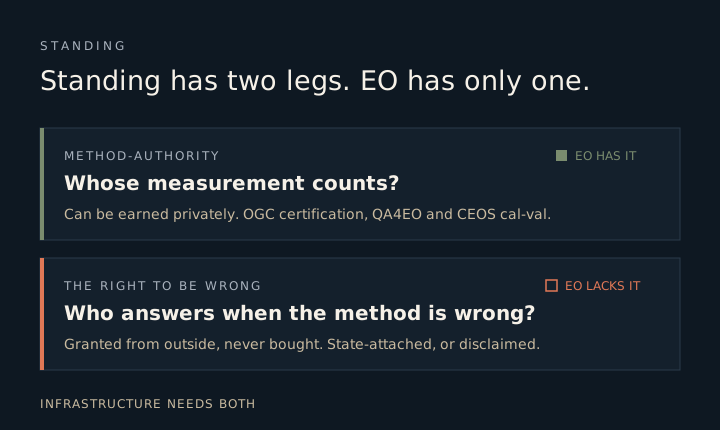
It would be easy to conclude from this that only the state can confer the standing a use case needs. That conclusion is half right, and the half it gets wrong is the opening. The standing splits into two parts that behave differently. The first part is method-authority: the right to say whose measurement counts. This can be earned privately, with no government as the buyer. The shipping classification societies, Lloyd’s Register and DNV and the American Bureau of Shipping, wrote the rules that insurers and shipowners and flag states defer to, and they wrote them as private bodies. Underwriters Laboratories, whose mark certifies much of North America’s electrical equipment, was founded by the insurance industry, not the state. The credit-rating agencies built methods the market treated as authoritative long before any regulator referenced them. Method-authority is buildable from the private side, and EO has the beginnings of it: the Open Geospatial Consortium runs a certification programme, and the calibration-and-validation bodies under CEOS and the QA4EO framework set standards for whether a sensor’s measurement can be trusted.
The second part is the right to be wrong: the authority to settle who bears the loss when the authoritative method fails. In every case I can verify, this part is either attached by the state or actively disclaimed by the private body that holds the method. The classification societies look like the counterexample and are in fact the proof. Their binding statutory standing, the authority to certify a ship on a government’s behalf, is conferred by the state, through Recognized Organization status under the international safety convention. In their purely private capacity, the courts have declined to impose on them a duty of care to the cargo owners who lose out when a ship they surveyed sinks, as the House of Lords held in 1995 in the Nicholas H. Underwriters Laboratories carries no strict liability for what its mark certifies; its listings become mandatory only when a workplace-safety regulator or a building code adopts them. The rating agencies took on real legal exposure for being wrong when a statute attached it, in the Dodd-Frank Act that followed the financial crisis. The method these bodies own outright. The right to be wrong arrives from the state, or it is shed.
EO has the first and lacks the second. The Open Geospatial Consortium will certify that a method conforms, then disclaims in its own terms every warranty and liability for what the method produces. The calibration bodies will tell you a measurement is sound and stand behind none of its uses. When the method is wrong, as in Nagaland, the loss lands on nobody who certified the data. It lands on whoever wrote the contract, or on the state that backed the scheme.
Weather is also a model
The obvious objection is weather. Weather runs the world, and I have circled it before: every insurer, airline, and grid operator depends on it without deciding to, and it has no Lloyd’s Register, no body that answers for a forecast. A forecast is a model too, every bit as fallible as a fire score. So how did it earn the right to be wrong when EO has not?
Weather earned it the other way: a shared acceptance that the forecast can be wrong. Over a century of public forecasting, everyone has agreed the forecast can miss, so a wrong one is normal rather than a breach. EO is sold as precise truth, sub-metre, daily revisit, the exact answer, so when it is wrong it lands as a failure, a scandal. Weather is sold as a probability, so when it is wrong it lands as Tuesday. No single user built that acceptance, and no buyer could manufacture it. It rests on public weather services, on the formats the World Meteorological Organization standardised decades ago, and, where the stakes run highest, on law that hands the residual risk to the user rather than the forecaster. EO has none of it, because it is sold as the exact answer, not the best estimate of a model that will sometimes miss. That is the difference between an input and infrastructure.
The scarce layer is standing
This reorders what the commercial EO market has assumed about its own constraint. The assumption is that the binding scarcity is the data: resolution, revisit rate, the proprietary constellation. But the cases that crossed into non-discretionary use did so on free public imagery, and the best privately cornered case bought commercial data and still stalled until public standing arrived. What made the difference was standing. The scarce layer, the one no amount of capital deployed against satellites can buy, is the right to be wrong. It is not a market good, and no single buyer can own it.
So what commercial EO is missing sits outside the data entirely: the permission for a fallible model to be wrong without it being a scandal, conferred by someone other than the vendor. That permission has formed two ways before, and EO has neither yet. One is a body that bears the miss: a liability-bearing authority for satellite measurement, the way Lloyd’s Register stands behind a hull, or the way the rating agencies stood behind nothing until a statute put them on the hook. The other is a norm that accepts the miss: characterised, published uncertainty that buyers and the public learn to read the way they read a forecast, so a wrong answer is expected error rather than failure. The first wants a builder and patient capital. The second wants honest uncertainty and time. Neither is on a schedule the market can set.
Hold it as a bet, not a forecast. These are analogies, and it has not been shown that the way a satellite model fails can carry either kind of standing the way a hull or a forecast does. What they establish is the shape of the missing thing: permission to be wrong, conferred from outside, which no sharpness of sensor supplies. Whether it forms for EO, and on what clock, is outside any single builder’s control.
The read for a cornered buyer
For an institution sitting where the California insurer sits, the usual read asks whether the data is good enough yet. A sharper one asks whether you are cornered, and if you are, who holds your right to be wrong. If your decision is already non-discretionary and the method you have always used has stopped working, then you are the buyer this market has waited for, and waiting for the conditions to form on their own is the more expensive option. The thing to design for is the standing: which authority will say your method counts, what reference your contract will sit on, and who carries the loss when it is wrong, because you cannot settle any of it alone. And if you are not cornered, the pilots on your dashboard will not cross into operations however sharp the imagery becomes; they are best read as what they are, not funded as though they were on their way to infrastructure.