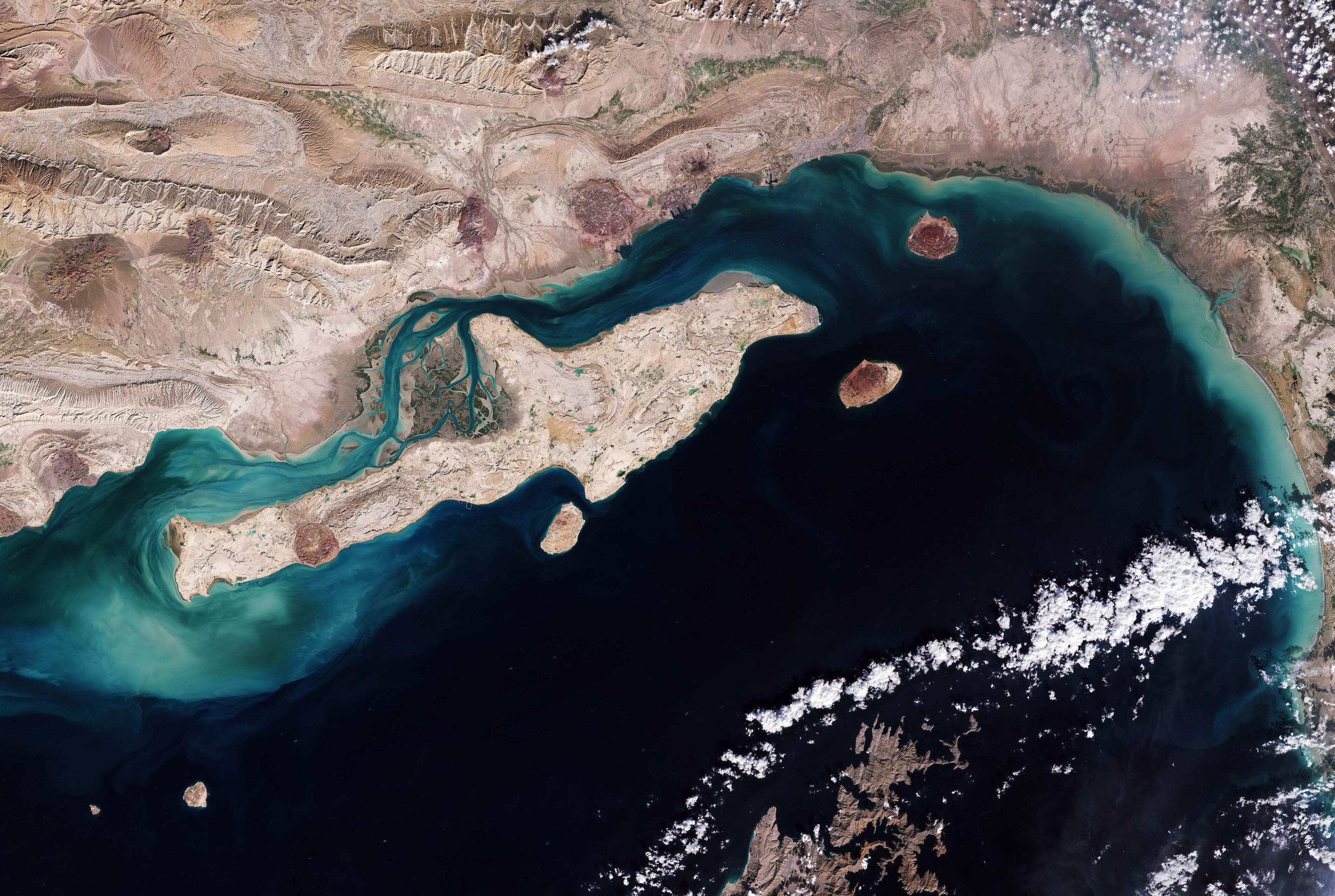
On April 5, at the request of the US government, Planet Labs began withholding its satellite imagery across Iran, Iraq, Israel, Lebanon and the Gulf states. The restriction had been tightening for weeks: a 96-hour delay on Middle East imagery, then a fortnight for non-government users, then an indefinite withhold backdated to early March. Through all of it the US military kept immediate access. The customers who lost it were the commercial ones, the journalists and researchers who use Planet to check what governments claim, and the paying accounts that make up the minority of Planet’s revenue the company has spent years trying to grow. They were offered a managed-access process, and then a pointer toward European and Chinese providers.
For most people following the war, this was a story about wartime secrecy, and a fair argument about press freedom. For anyone who has priced an Earth observation company, or pitched one, it was something quieter and more consequential: an assumption coming due.
The assumption sits in nearly every commercial EO deck, and it has become a reflex among the investors who fund them. It travels under one phrase, “we can do dual-use,” and it is offered as though the phrase enlarges the business. A climate or commercial company that can also sell to defence has a second market, a deeper pipeline, a hedge for the quarters when the commercial side is slow. Dual-use, in this telling, is additive: the same satellites, two sets of buyers, upside stacked on upside. I have sat across the table from founders making exactly this case, and the shape of the claim never changes. The defence revenue is treated as found money, an option the company holds and can exercise whenever it chooses.
It is the wrong way to read it, and the error starts in the hardware. A synthetic-aperture radar satellite that sells flood-extent maps to an insurer is the same satellite, unchanged, that sells movement-tracking to a defence ministry. The sensor does not know which customer it is serving. What separates the two uses is not the technology but the licence: the export classification, the security designation, the terms under which the data may be sold and to whom. And the licence is not the company’s to write. It is assigned, from above, by the state. So “dual-use” does not name two products a company has built and can sell in parallel. It names one capability that a government can place on either side of a line it alone controls. That distinction is the whole argument, because it turns dual-use from something a company owns into something a company is granted, and grants can be withdrawn.
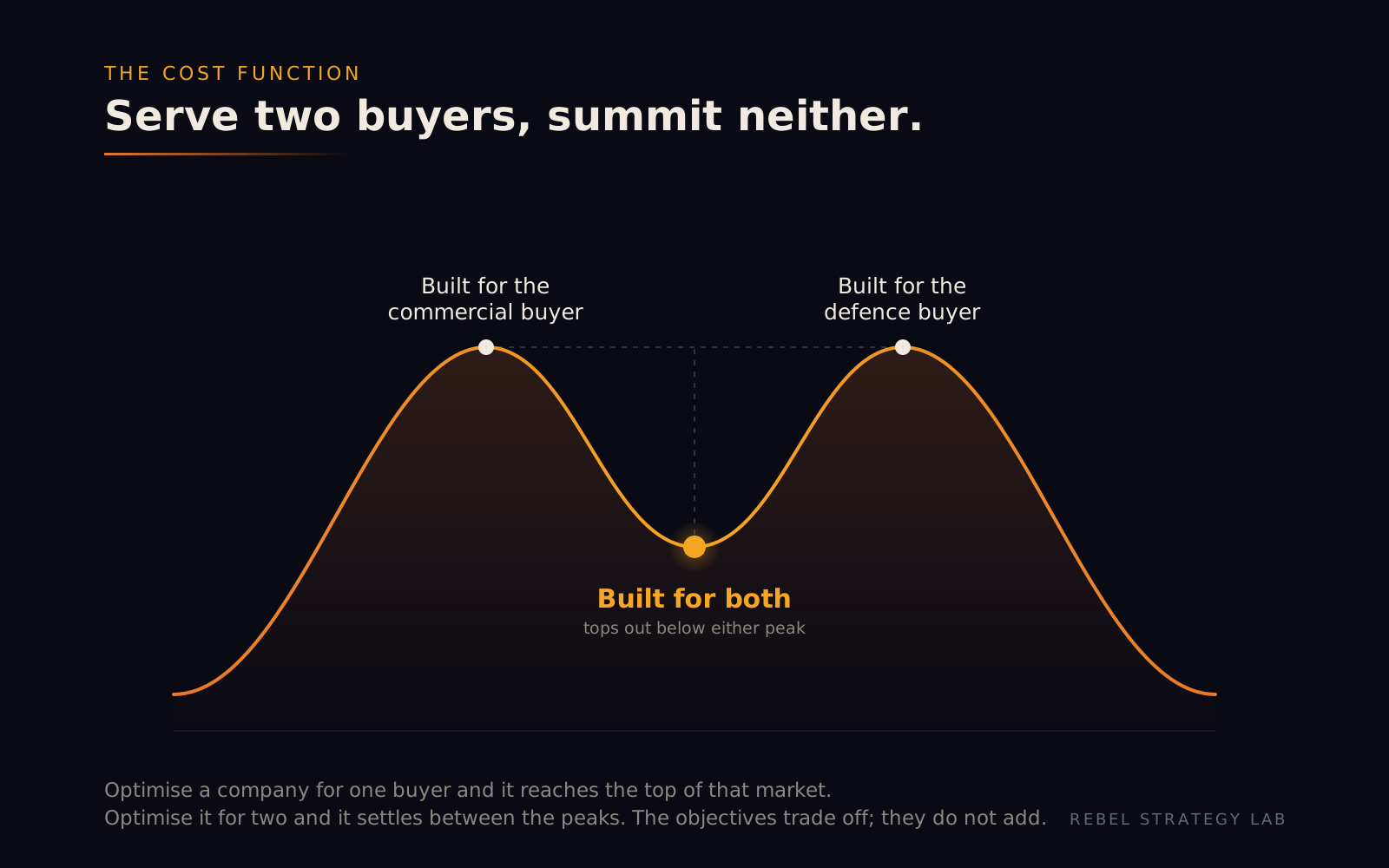
Once you read it that way, dual-use stops looking like an opportunity and starts behaving like a cost function. The logic is the one any optimisation obeys. Build a company to serve a single buyer and it can climb to the top of that market, with the product, the pricing, the support and the data terms all tuned to one kind of customer. Build it to serve two and it cannot reach the top of either, because the two customers want incompatible things. A defence buyer wants tasking priority, custody of the data, clearance-gated access, and the assurance that a commercial competitor cannot see what it sees. A commercial buyer wants the reverse: published pricing, open access, wide distribution, the freedom to build a business on top of the feed. A company optimised for both settles somewhere between the two peaks and summits neither. That is not a failure of execution. It is the shape of the function: two objectives that pull in opposite directions do not add, they trade off.
There is an objection to this, and it is the strongest one. Plenty of companies plainly do both. Planet sells to commercial customers and to the US defence and intelligence community. Maxar, now Vantor, is built around government and defence revenue and still licenses commercially. ICEYE flies a commercial radar constellation and, at the same time, builds dedicated satellites for governments and runs a defence joint venture with Rheinmetall. If dual-use were a trap, these companies would be stuck in the valley between the peaks, and they are not. But look at how they did it, because the method is the point. None of them runs one integrated operation serving both buyers as equals. Each one split. Planet stood up Planet Federal, a separate, security-cleared subsidiary; Capella did the same with Capella Federal; ICEYE separates its commercial constellation from its sovereign and defence work by design. They escaped the single-objective trap the only way it can be escaped, by no longer running a single objective. They built two companies and optimised each against its own buyer.
That works, and it is not free. Splitting is an admission. The company the pitch deck implies, one operation serving climate and defence as equals with the second market as pure upside, does not exist as a running thing. You have now financed two businesses where the story promised one, with the overhead, the governance and the divided attention that implies. And even then the commercial side does not come out even, because the control layer was never yours to hold. Planet is the proof. It had already split, with Planet Federal carrying the government work, and in April it was still Planet’s commercial customers who lost access first. Bifurcation buys two optimised businesses; it does not buy the commercial one a seat the state cannot take back. Run a single operation and you optimise neither buyer. Split into two and you pay for both while the commercial half stays the junior partner. There is no fourth quadrant in which dual-use is the costless opportunity the deck describes. Every route off the assumption costs something; the only question is whether the company chose the cost deliberately or backed into it.
This is not new, which is part of why it is worth naming. In 1999 the United States moved commercial communications satellites onto its munitions list, and overnight an entire category of commercial business came under export control. The companies affected had not changed what they built; the state had changed which side of the line their product sat on. The friction was severe enough that “ITAR-free” became a selling point for manufacturers outside the US, and it took the better part of fifteen years to partly unwind. The commercial framing held right until the state decided it did not, and the state had never given up the switch. What is different over the Gulf this spring is only that the switch was thrown in the open, on the operator that markets itself as the most commercial in the sector. And this is not a quirk of American law. Every state with a serious space sector keeps the same instruments: its own export regime, its own designation of which capabilities are sovereign, and its own authority to restrict the operators it licenses. A European company selling into European markets sits under a European version of the same switch; it has simply not yet been thrown in public.
This is where the prevailing way of thinking turns out to be short-sighted, and the error is structural rather than careless. The founder and the investor are both optimising the variable they can see, the number of addressable markets, inside a model that quietly assumes two things that are not true: that the two uses are separable at will, and that the line between them is the company’s to manage. Neither holds. The capability is single, and the line belongs to the state. Optimising harder inside that model does not help; it makes things worse, because every move to win the second market deepens the company’s dependence on a permission the state can revoke. The blackout is that model becoming visible. Planet’s commercial customers had always been the junior claim on a capability the state could direct, and the war only made the ranking explicit. What the deck had booked as a second market turned out to be a second cost the company had been carrying all along.
For investors, the exposure reaches the thesis itself. A climate fund backing a dual-use Earth observation company has bought a company whose climate work, the flood maps, the emissions monitoring, the disaster response, is the junior use: the first to be suspended when the state wants the capability for something else. That work matters. It also sits on the side of the line the company does not control, which makes it the part of the thesis most exposed, and usually the part nobody priced.
None of this means dual-use cannot be done. It means it cannot be assumed. The operators that carry both buyers well decided early which one was primary and engineered the company around that decision, treating the second use as a cost to design for rather than a market to bank. The founder who leaves “we can do dual-use” in the deck as a free hedge has not avoided the decision but made it by default, in favour of the state, and told their climate investors a story the architecture will not hold the first time it is tested. The investor who priced the optionality without pricing the cost owns the same gap from the other side of the table. The bill arrives either way. The only choice is whether the company prices the cost itself, with open eyes and a deliberate design, or waits for a government to price it instead, the way one did, for Planet, on the fifth of April.