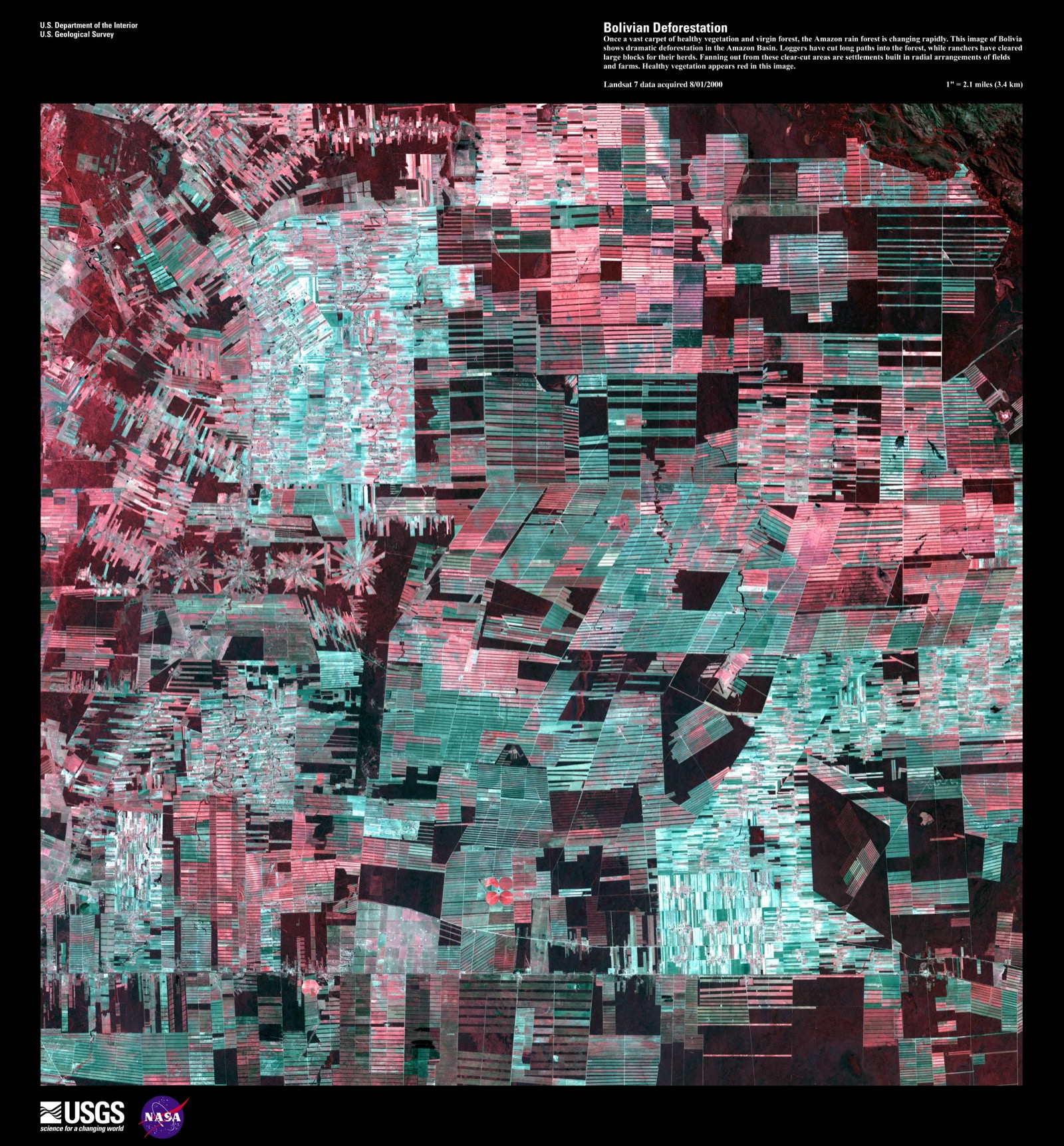
You can get a PhD in atmospheric physics. You can raise $100 million. You can build satellites that image the Earth at 16cm resolution, through clouds, at night.
And nobody — at any point in that journey — required you to explain what you do in words a random person on the street could understand.
How we got here
Science and engineering education reward complexity.
You pass qualifying exams by demonstrating mastery of difficult material. You publish papers that impress peer reviewers with technical sophistication. You defend dissertations in front of committees who share your specialized vocabulary.
At no point does anyone grade you on: ‘Can someone outside your field understand what you just said?’
Clarity isn’t just unrewarded. It’s subtly discouraged. If you can explain it simply, maybe it wasn’t that hard. Maybe you’re not that smart.
So we learn to signal intelligence through complexity. We attach our egos to being the one who built the hard thing. We speak to impress, not to be understood.
This isn’t unique to engineering. Finance has its own vocabulary. Law does. Medicine does. Every specialisation builds walls of language. We speak to our peers, not to the people who need to understand us.
Then we try to work with someone who doesn’t share our training. And wonder why they don’t follow.
The resolution race
The Earth observation industry is a perfect case study.
Albedo is building 10cm resolution satellites. Maxar delivers 30cm. ICEYE achieves 16cm. So does Umbra. Every pitch deck features the same metrics: higher resolution, faster revisit, and more coverage.
These are genuine engineering achievements. They also represent engineers competing for other engineers’ respect.
Defence and intelligence agencies pay for resolution. They have trained analysts, an established doctrine, and decades of experience interpreting satellite imagery. They wrote the requirements. The product-market fit is real.
Commercial buyers — insurers, agricultural companies, infrastructure managers — didn’t write those requirements. They don’t have GIS teams. They don’t know what to do with a 16cm SAR image.
They don’t want data. They want an answer.
But we keep building more impressive sensors. Because resolution is measurable. Because it wins contracts from buyers who do value it. Because it’s what we were trained to optimise.
And because explaining things simply feels like giving something up.
The anxiety underneath
Measurable goals feel like control.
Resolution: measurable. Revisit rate: measurable. Constellation size: measurable. Revenue from government contracts: measurable.
Did we help someone make a better decision? Messy. Subjective. Terrifying.
Can a non-specialist explain our product to their boss? Requires admitting your product might be confusing.
Does our customer success team understand the customer’s actual workflow? Requires talking to customers about their problems, not your capabilities.
So we optimise what we can measure. We build what we can put on a slide. We compete on specs that impress at conferences.
The anxiety of ‘am I actually useful?’ gets converted into the comfort of ‘look what I built.‘
What this produces
Planet went public, projecting commercial revenue would grow from 54% to 68% by FY26. It’s now 23%. Stock recovered on government contracts — NATO, Swedish Armed Forces — not agriculture or insurance.
ICEYE raised at €2.4 billion valuation in late 2025. Not from commercial climate applications — from a €1.7 billion German Bundeswehr contract and deals with Poland, Finland, Netherlands. Their VP told Defence News: “We’re becoming more and more of a defence-intelligence company.”
Descartes Labs, Orbital Insight — both raised on the thesis that AI plus satellite data would unlock commercial markets. Both collapsed or were rescued. Ultimately, revenue came from government and intelligence, not from the commercial transformation they pitched.
The pattern: commercial promised, defence delivered.
Not because defence is easier. Because defence buyers speak the same language. They value the complexity. They have the training to use it.
Commercial buyers needed something else. And nobody taught us how to build that.
What commercial actually needs
It’s not a better resolution.
It’s reliability. Does the product work when the customer actually needs it? During the flood event, during the supply chain disruption, during the crisis — not just in the demo.
It’s responsiveness. When they email with a question, does anyone answer? This week? Tomorrow?
It’s plain language. Can the customer explain your output to their boss, who’s never heard of SAR and doesn’t care about your specs?
It’s customer success that actually succeeds. Does your team understand the customer’s workflow — or just your product’s features?
No customer, no money. Basic. But we skip it to get back to the engineering problems we enjoy solving.
The companies showing commercial traction share a common trait: the satellite becomes invisible. The customer gets methane emissions data, not spectral analysis. Wildfire alerts, not thermal imagery. The translation is done before the customer sees anything.
The transformation we can’t deliver
The problem is even deeper.
We can’t drive the transformation that’s actually needed — in climate, in infrastructure, in how we allocate capital — because we can’t communicate what we’re seeing to the people who need to act on it.
The satellites show us coastlines retreating, glaciers melting, growing zones shifting. Scientists understand the implications. But the translation never happens. The insight stays locked in jargon, in technical papers, in conference presentations that speak to the already-converted.
Transformation requires a coalition. Coalition requires communication. If you can’t explain what’s happening in language that decision-makers understand, you can’t build the coalition to act on it.
So we default to optimisation. We sell what fits existing frameworks — helping insurers process claims faster, helping farmers optimise this season’s yield, helping the system absorb shocks and continue. Not because transformation is impossible. Because we never learned to make the case for it.
And the capital structures we use — venture timelines, commercial revenue requirements, standard return expectations — select for optimisation by design. Transformation might need something different entirely.
What would have to change
What if explaining your research in plain language was a graduation requirement?
Not a ‘broader impacts’ statement buried in a grant application. An actual test: can you make a random person on the street understand what you do and why it matters? If not, you don’t pass.
What if investor pitches had to clear a clarity bar? Not ‘is this technically impressive?’ but ‘could a procurement officer at an insurance company explain this to their team?’
What if we stopped treating simplicity as dumbing down?
The hardest thing in science isn’t building something complex. It’s understanding it so deeply that you can explain it simply. That requires more mastery, not less.
But we don’t reward it. So we don’t develop it. So we build extraordinary things that sit unused because nobody outside our field can figure out what they’re for.
The founders aren’t the problem
This isn’t about bad founders or failed companies.
It’s about a system that trains brilliant people to optimise for the wrong things. That rewards complexity over clarity. That never requires translation as a core skill.
The founders building 16cm satellites aren’t wrong. They’re doing exactly what they were trained to do, building for buyers who value exactly what they were trained to build.
The gap is that commercial markets — and the transformation we actually need — require something different.
The founders aren’t wrong. They’re products of a system that never taught them to translate. Seeing that gap is the first step. Closing it is something else entirely.