The map · as of July 2026
A map of jobs, not markets
Every accountable job a satellite can feed, across nine domains, and who owns the standard the answer is measured against. Owning that standard is a position: the seat. Whoever sits in it decides what a right answer is.
The domain
The job
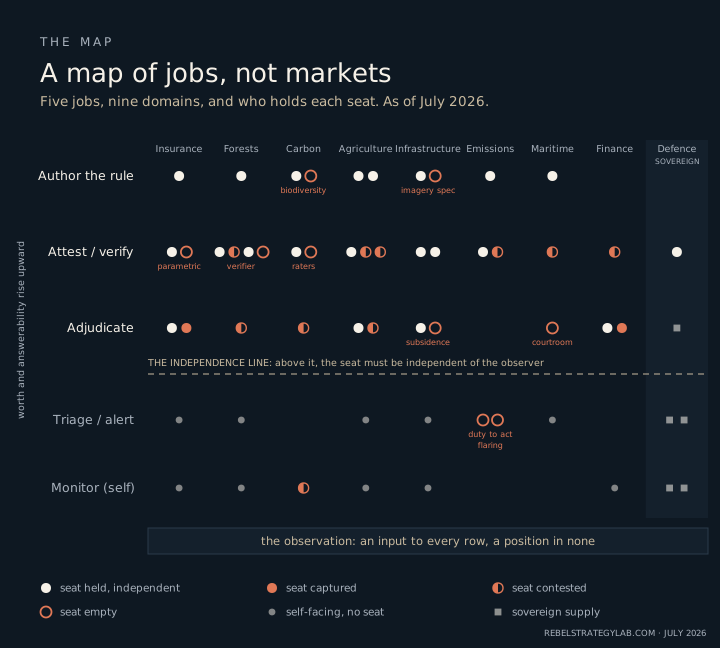
How to read it
A job is a specific act a buyer answers for, and a satellite is always one input into it, never the whole. Below the dashed line the buyer convinces nobody but themselves, and the work commoditises unless the feed becomes something operations are built on. Above the line the answer must satisfy somebody else, against a standard someone independent owns. The coral marks are the seats that are captured, contested, or standing empty. An empty seat is not an opening. A job is not a market: the map names the job and whose rule it answers to; whether the buyer who owns the job will pay for help with it, the map cannot say.
One more distinction hides in the rows. A satellite only ever sees change, a thing against its own past; a difference is change held against somebody's rule. Everything below the line lives in change, everything above it lives in difference. That is a different piece, but the difference is worth thinking about.
What is not on the map
The research behind the map covered roughly seventy-five accountable jobs. Twelve are not shown because no satellite is in the stack at all; the rule runs on paperwork, auditors, ground stations, or registers: the EU carbon border charge, financed-emissions accounting, sustainability assurance, net-zero target validation, aviation offsetting, corporate disclosure, the land register, national greenhouse-gas inventories, nuclear-test monitoring, space domain awareness, marine war-risk zones, and supply-chain due diligence. A handful more are folds: the same job filed under two domains, kept once.
Supply chain has no column because it is not an industry: it is a function that runs through several columns, and its jobs are already here, filed under what the satellite watches. Proving a shipment deforestation-free sits in Forests; the commodity risk tier sits in Agriculture; the buyer who answers for both is usually a consumer-goods company. Read Attest / verify across the columns and you are reading the supply chain. The columns, in general, are where the accountability clusters, not a taxonomy: some are buyer industries, some are what the satellite watches.
The map moves
A seat sits empty until a force arrives: a mandate, a loss that makes liability real, or an operation that cannot run without the feed. The forces run on different clocks. This map is a reading taken in July 2026, updated in place; each revision re-dates it.
First edition, July 2026: 57 jobs, nine domains. Sources: public regulation, filings, and trade press, verified at publication.